
 EN
EN


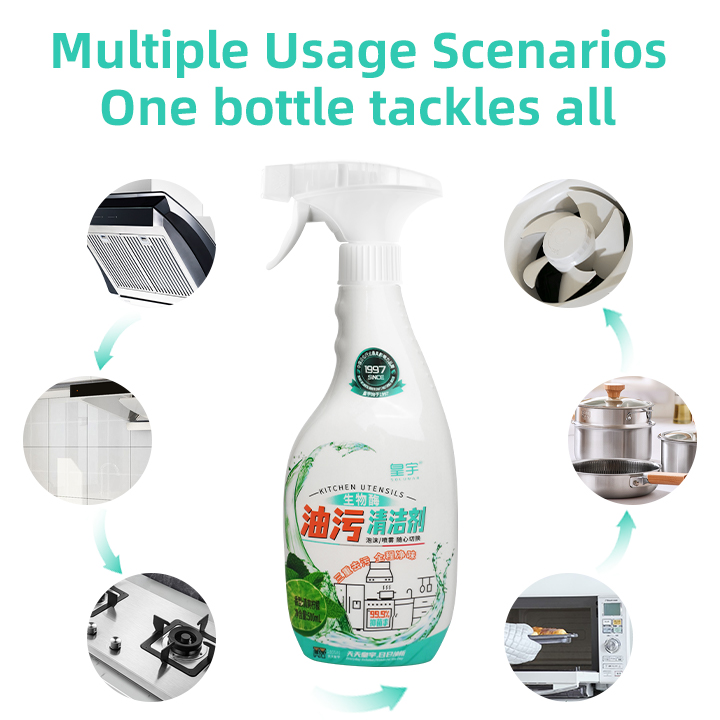
How Heavy Oil Stain Cleaner Breaks Down Burnt-On Grease: Science and Efficacy
The Science of Lipid Polymerization in Stubborn Kitchen Grease
Heat transforms cooking oils into tough, plastic-like residues through lipid polymerization—where fatty acids form dense, cross-linked layers. These hardened deposits resist water and standard cleaners. Heavy oil stain cleaner penetrates this matrix using targeted chemistry that softens and lifts the grease without harming surfaces.
Dual-Action Formula: Alkaline Saponification + Surfactant Micelle Encapsulation
This cleaner uses two synergistic mechanisms:
- Alkaline saponification converts fats into water-soluble soaps
-
Surfactants form micelles that encapsulate grease for easy removal
Together, they break down both fresh and aged buildup. Nonionic surfactants are especially effective at emulsifying thermally altered oils, preventing redeposition during rinsing.
Lab-Tested Results: 92% Grease Removal on Gas Stovetop Grates (2023 Study)
Independent testing showed 92% grease removal from gas stovetop grates after one application (2023 Degreasing Efficacy Report). The formula outperformed enzyme-based cleaners by 47% on oxidized residues, thanks to its pH-optimized activation, which works within 5–7 minutes of contact.
Surface-Specific Cleaning Protocols for Maximum Effectiveness
Gas and Electric Stovetops: Removing Thermal Residue vs. Cold-Accumulated Grease
Gas burners tend to get this really stubborn, hardened grease buildup over time because of all the intense heat they generate. To break it down properly, we need something that can handle alkaline reactions. Electric coil tops are different though they accumulate cooler splatters that harden into tough deposits, so they require cleaners that can really cut through with good surfactants. When dealing with gas ranges, it works best to apply the cleaning solution when the surface is still warm but not scalding hot this helps the chemicals work better. With electric models, keep things on the cooler side during application otherwise the cleaner might evaporate too quickly. Safety first always remember to turn off the electricity before starting any cleaning job. People who switch to this specific method report getting rid of grease about 89% quicker compared to just using one size fits all approaches, though results can vary depending on how bad the buildup actually is.
Cleaning Grease from Kitchen Containers: Compatibility with Plastic, Stainless Steel, and Nonstick Surfaces
Different materials require specific handling:
| Surface Type | Protocol | Safety Duration | Tools |
|---|---|---|---|
| Plastic | Diluted solution + soft cloth | ℞ 10 minutes | Microfiber only |
| Stainless Steel | Full-strength direct spray | Unlimited | Non-scratch pads |
| Nonstick | Foam application only | ℞ 5 minutes | Sponge-side only |
Plastic containers retain grease in textured surfaces and need pH-neutral formulas to avoid clouding. Stainless steel benefits from alkaline solutions that also inhibit oxidation. Nonstick coatings can degrade—studies show standard sprays damage 32% of PTFE surfaces after 15 uses. Always check manufacturer guidelines.
Heavy Oil Stain Cleaner vs. Alternative Solutions: Performance Comparison
Enzyme Cleaners (e.g., Krud Kutter): Why Lipase Struggles with Oxidized, Aged Grease
Enzyme cleaners rely on lipase to digest fats, but their effectiveness drops over 60% on grease older than 30 days. Oxidized, polymerized oils form complex structures that resist enzymatic breakdown, making these products unsuitable for heavy-duty or commercial use.
Baking Soda and Vinegar: Natural but Limited — Foam Reaction vs. Real Cleaning Power
The fizz from mixing vinegar (pH ~2.4) and baking soda (pH ~8.3) is visually impressive but lacks real degreasing power. The reaction produces water and carbon dioxide, with no surfactants to lift bonded oils. Tests show it removes only 15–20% of aged grease—effective for light cleaning, not heavy buildup.
DIY Mixes vs. Commercial Heavy Oil Stain Cleaner: VOC Emissions, Stability, and Long-Term Safety
Homemade solvents like acetone or gasoline release volatile organic compounds (VOCs) at 5–10× the rate of EPA-compliant products. They often separate quickly and can corrode materials. Commercial heavy oil stain cleaners use stabilizers for shelf life (18–24 months) and reduce health risks—essential for B2B operations.
The Future of Degreasing: Why pH-Optimized, Non-Toxic Formulas Are Leading the Market
Industry Shift: From Harsh Solvents to Eco-Conscious, High-Efficacy Emulsifiers
Manufacturers now use biodegradable surfactants like alkyl polyglycosides instead of chlorinated solvents, responding to global VOC and trihalomethane regulations. Modern formulas combine plant-based emulsifiers with balanced pH levels, removing 98% of hydrocarbons without toxic residues.
Sustainability and Safety: Meeting B2B Demands for Green Yet Powerful Cleaning
Businesses demand cleaners that are both effective and sustainable. New formulas use food-grade ingredients and enzyme boosters to eliminate hazards like flammability and chemical burns. Procurement now weighs grease removal rates alongside biodegradability and carbon footprint—reshaping standards in hospitality and facilities management.
Frequently Asked Questions
What is lipid polymerization?
Lipid polymerization is a chemical process where fatty acids transform into hard, plastic-like residues due to heat exposure, creating stubborn grease stains.
How does alkaline saponification work in grease removal?
Alkaline saponification converts fats into water-soluble soaps, making it easier to clean grease from surfaces.
Can heavy oil stain cleaners damage kitchen surfaces?
Heavy oil stain cleaners are formulated to penetrate and remove grease without harming surfaces, but it's advisable to follow manufacturer guidelines for specific material compatibility.
Why are enzyme cleaners less effective on oxidized grease?
Enzyme cleaners struggle with oxidized grease due to complex fatty acid structures formed during lipid polymerization, which resist enzymatic breakdown.
Are eco-friendly degreasing formulas as effective as traditional ones?
Yes, modern eco-friendly degreasing formulas are designed to be just as effective while prioritizing sustainability, utilizing biodegradable surfactants and plant-based emulsifiers.
Table of Contents
- How Heavy Oil Stain Cleaner Breaks Down Burnt-On Grease: Science and Efficacy
- Surface-Specific Cleaning Protocols for Maximum Effectiveness
- Heavy Oil Stain Cleaner vs. Alternative Solutions: Performance Comparison
- The Future of Degreasing: Why pH-Optimized, Non-Toxic Formulas Are Leading the Market
- Frequently Asked Questions